Friday, 3 August 2012

Wedding and Bridal Dresses

 (Google.com.pk)
Wedding and Bridal Dresses Biography
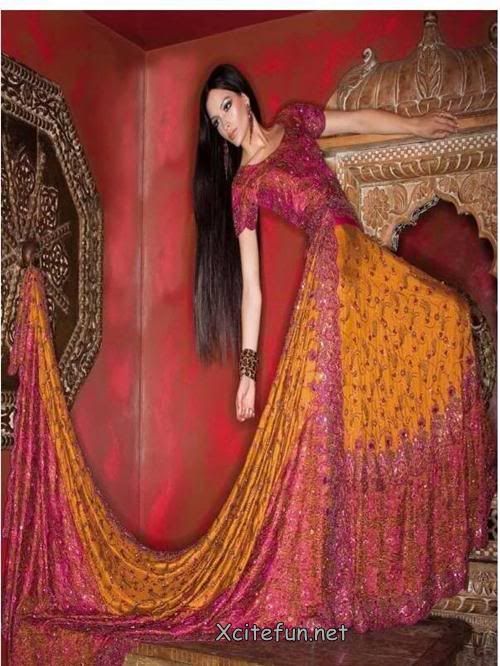
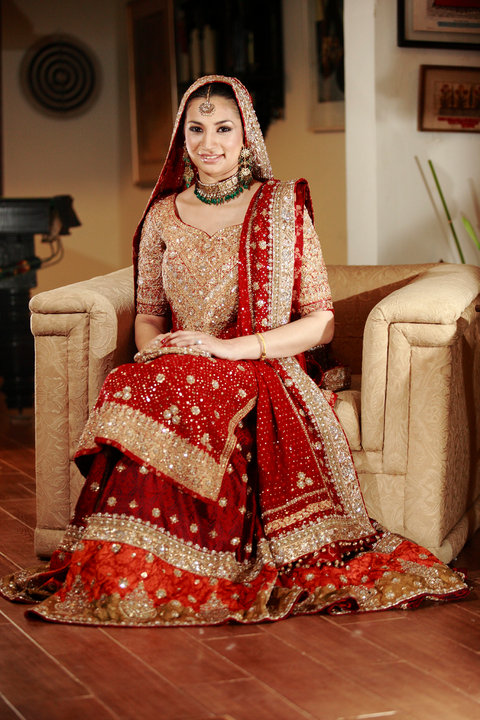
This is really amazing dressing of bridals. Pakistani girls love to wear on weddings. Pakistani Bridal Sharara originally dressed as a Muslim girls for wedding occasion but has a reputation among Indian women. This is one of the richest models, such as clothing art. Pakistani bridal sharara crepe satin, chiffon, Georgette and wear Silk.This was strange bridal knees and knees big flash is set to rich, full skirt has the as a symbol of dignity and honor. This dress personality on teen younger girl and mostly use on wedding occasion.


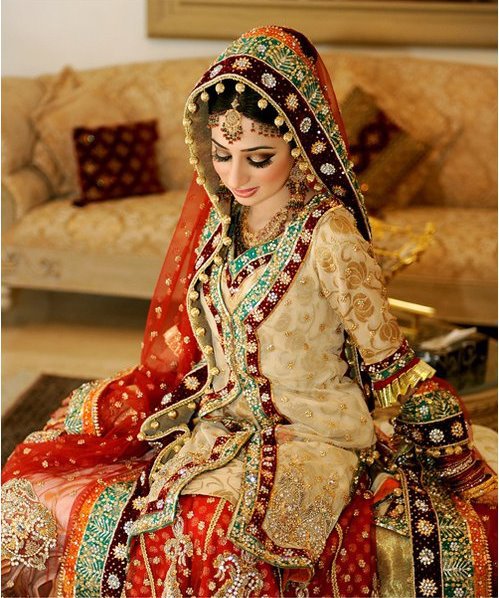
There is no one type of outfit that a Pakistani bridal and groom wears to their wedding. The options for a Pakistani bridal as to the choice of her wedding outfit can be plenty.Bridal can choose to wear a Sharara, Gharara, Lehenga Choli, Mermaid Cut lehenga, Churidar and Pyjama with Angrakha, Salwar kameez, Pakistani salwar suits or the saree.Wedding is a memorable traditional event in every one’s life. The dresses and jewelries play the major role as the bride and the groom want to look elegant. Wedding dress and jewelry is very important in Pakistan also. Pakistani bride selects a perfect wedding dress to look attractive. Bridal will remember this for the rest of her life.TweetBridal Dresses There is no one type of outfit that a Pakistani bridal and groom wears to their wedding. The options for a Pakistani bridal as to the choice of her wedding outfit can be plenty.Bridal can choose to wear a Sharara, Gharara, Lehenga Choli, Mermaid Cut lehenga, Churidar and Pyjama with Angrakha, Salwar kameez, …
Wedding and Bridal Dresses
Wedding dresses fashion show full with Pakistani & Indian dresses.wmv
Designer Wedding Dresses: Christian Lacroix Bridal Dresses

East Bridal Wedding Dresses

(Google.com.pk)
East Bridal Wedding Dresses Biography
"For every married woman across the nineteenth-century America, her wedding was the most significant event of here life. In those few moments, no matter how elegant or humble the surroundings ..... she permanently committed herself to the man standing there at her side clasping her hand." 1

When 20 year old Queen Victoria made her wedding plans the ideal of what a brides dress should look like was changed for all future brides and even today a lovely white dress is the dream of every bride.

Weddings Before Queen Victoria's

Before this famous wedding a royal bride wore heavy state robes of materials such as brocade and velvet. Not so with the everyday bride. American weddings were simple things usually held in the bride's home.

A Massachusetts country wedding in 1827 was described in this way. Neighbors and relatives were crowded into a farmhouse parlor with the bride and groom in front of the minister. He joined the couple's hands together and led them through a short exchange of vows.

"Most American couples were wed by a clergyman at the home of the bride, in such informal ceremonies of republican simplicity." 2 The bride wore the best dress she had or could make whatever that might be.

Interestingly white had been worn for weddings earlier simply because during the late eighteenth century and early nineteenth white linen homespun dresses were the usual for best dresses. Many young women made such a dress for her wedding as it could be worn after her wedding for other occasions. If she had the means she could even purchase sheer cotton mull, cambric or dimity for a finer white dress. 3

A new trend developed in the second quarter of the nineteenth century. Wedding dresses were more often made of printed cotton or lightweight wools perhaps with some silk mixed with the wool. Florals and strips were popular. Such dresses could not only be used as a best dress but could also be a traveling dress.

Queen Victoria's Dress Sets a New Standard

Then came the wedding of the century. Queen Victoria's wedding wasn't just the talk of the town, it was the talk of the western world. "Thousands and thousands of newspapers and periodicals were shared, reaching women in remote new settlements hungering for fineries and romance. Queen Victoria's wedding was the talk." 3

As soon as this famous wedding occurred the ideal of a proper wedding changed. Women were advised to wear a white gown and veil with her head crowned with artificial white orange blossoms. One difference from the custom today was that the bridesmaids were to wear white dresses as well, though in a simpler style.

The truly elegant wedding was to be a held in a church but this did not mean that all brides suddenly wore white and got married in a church. Most weddings would still be at home and the bride would wear the best dress she could afford. She may have dreamed of something more elegant but would not mind too much as simpler weddings were quite acceptable. Even some brides who could afford a white wedding gown sensibly chose a nice dress or two piece suit that she could continue to wear after her wedding.

The Wedding Bonnet
One small token she might be able to afford was a white wedding bonnet. She would wear a dress that could be worn again and again for special occasions but her wedding bonnet could be kept as a special memento in remembrance of her wedding day. The picture on the left is an example of this.

By the last decades of the nineteenth century it was more possible for young women to wear a white dress simply because the fabric needed was affordable and readily available. Even in remote areas could be ordered through a catalog. In addition Buttrick and later McCall's patterns were available so anyone with sewing skills could make their own dress or someone in the family could make it for them. As the twentieth century proceeded the wearing of a white bridal gown became more and more common.

Quilts have long been made either for a wedding gift or actually made by the bride herself in anticipation of marriage. Although the patterns used varied greatly one that was popular in the mid 19th century was the appliqued Rose of Sharon Quilt pattern. "The name of the block comes from the song of Solomon: "I am the rose of Sharon, and the lily of the valleys.' The verses are generally recognized as celebrating the passion and love between a man and a woman and honoring the sacrament of marriage." 4

East Bridal Wedding Dresses
Biggest Bridal Show in the Middle East
Bridal Shop East Providence RI Ana's Bridal & Tuxedo

Thursday, 2 August 2012

Bridal Dresses wedding

(Google.com.pk)
Bridal Dresses wedding Biography
There's a reason why the first thing a Pakistani and Indian bride does after the proposal is look for the perfect Wedding Wear. The Wedding Dress is the formal attire she'll be wearing during the wedding album shoot and it's something to be commemorated for the rest of her life. She wants to look gorgeous, radiant and sexy.

Pakistani Wedding Dresses range in styles from, simple and elegant to flashy and outlandish and everywhere in between. Chances are the Pakistani Wedding Wear vendor will have an off the shelf gown to fit the personality and tastes of most brides.

Just in case an off the shelf bridal wear doesn't suit her, a bride can have a Bridal Dress custom made to her exact specifications. The vendor will work with her to design the precise look, and fit...right down to the fabrics used in the creation of the single most important piece of clothing a woman will ever wear.

Bargello.com is your online resource to locate the Pakistani Wedding Dress and Formal Wear like Shalwar Kameez, Kurta Pajama, Trouser Suit, Lehenga, Choli and Sari vendor near you who can find or create that perfect Eastern Bridal Wear for your wedding.

Pakistani Wedding Dresses, Wedding Lehenga, Designer Lehenga, Bridal Lehenga, Wedding Gharara, Designer Gharara, Bridal Gharara, Wedding Sharara, Designer Sharara, Bridal Sharara, Bridal Sari, Designer Sari. Fast Low shipping in the UK, USA, Canada, Australia and Saudi Arabia.

(South London Ilford Southall and Green Street Soho Road manchester birmingham) california (san diego sacramento haywar artesia laguna hills Berkeley Newark Sunnyvale Santa Clara Fremont Northridge Diamond Bar Beverly Hills CA) los angeles LA new york florida (orlando miami FL) georgia (decatur sw atlanta liburn ne atlanta norcross GA) illinois (chicago lincolnwood) maryland (Langely Park Woodlawn Rockville Baltimore MD) massachusetts (Boxboro Boston Westford MA) michigan (Wixom Farmington Hills Madison Heights Garden City Oak Park MI) new jersey (Iselin Jersey City Edison Carteret Fairfield NJ) new york (Oak Tree Road Jackson Heights Hicksville Floral Park Elmont Bellerose NY) pennsylvannia (Pittsburgh Philadelphia Warminster PA) texas (Vista Camino San Antonio Dallas Houston Austin Richardson Irving TX) San francisco (Bay Area richmond San Carlos San Mateo Burlingame SF)  Washington DC (Bethesda Kensington McLean Springfield Reston Arlington) Missouri (kansas city) Kansas (Manhattan Wichitia) Delaware (newark) Colorado (Denver)  Arizona Connecticut Iowa Michigan Minnesota Nevada North Carolina Ohio Oklahoma Portland Richmond Seattle Tennessee Virginia Wisconsin
Bridal Dresses wedding
Pakistani Bridal Dresses
Latest Fashion Pakistani Bridal Dresses, Lengha & Wedding Dresses

Bridal Wedding Dresses 2010

 (Google.com.pk)
Bridal Wedding Dresses 2010 Biography
After successful launch of Pakistan fashion week 2009 many latest Pakistani fashion trends and latest Pakistani fashion outfits have become hot favorites in Pakistani fashion, which reflects the level of interest in latest Pakistani fashion trends by the fashion lovers, this huge response from fashion lovers; gives a huge appreciation to all Pakistani fashion designers, models, photographers, stylists in short whole Pakistani fashion industry. This response really gives a boost to all Pakistani fashion designers to introduce new and unique latest Pakistani fashion not only in Pakistan; but in international fashion industry.

It's all possible because of the dedicated efforts from Pakistani fashion designers; who introduce latest Pakistani fashion outfits for all seasons, Pakistani fashion models; who represent fashion collections on fashion ramp and Pakistani fashion lovers; who appreciate latest Pakistani fashion wear especially fashion accessories, casual wear, bridal wear, salwar kameez, kurta, dupatta, jeans and t shirts fashion, In short they appreciate all kind of traditional and nontraditional fashion outfits and fashion accessories in past few years.
Bridal Wedding Dresses 2010
 
Bridal Wedding Dresses 2010
 
Bridal Wedding Dresses 2010 
Bridal Wedding Dresses 2010
 
Bridal Wedding Dresses 2010 
Bridal Wedding Dresses 2010
2010 Bridal Fashion Show - Wedding Dresses, Bridesmaids, Lingerie and Grooms Tuxedos
Amazing Wedding Dress Designs for 2010

Bridal Gowns Wedding

(Google.com.pk)
Bridal Gowns Wedding Biography
wedding dress follows in a long line of royal brides and - as the senior curator of the royal ceremonial dress collection, Dr Joanna Marschner, explains - there are certain conventions a royal bride must follow.
"The dress has to be able to carry the day and must be appropriate to the scale of the venue," Marschner told us. "It also has to speak of its time - rather than being timeless; royal wedding dresses usually have deep messages that are important to their era - and, most importantly, it has to be chosen by the bride."
SEE THE HISTORICAL ROYAL DRESSES
From Queen Victoria's lace and silk dress, which popularised white wedding dresses, to Princess Margaret's stunningly tailored Sixties gown, royal wedding dresses have both mirrored and set the trends of the day. So, with all her royal wedding nous, which does Dr Marschner feel is the most memorable?
"For me it is the Queen's," Marschner admitted. "It is so beautifully made - and was really a national investment. It was definitely a product of the time, so hopeful in the period following the war, and my own mother's dress was so similar; people really aspire to royal wedding dresses. The Queen's is now in her private collection."
Bridal Gowns Wedding
Bridal Gowns Spring 2013 , Vera Wang, Oscar de La Renta Wedding Dresses - Fab Flash
Bridal Gowns Wedding Dresses in www.jpcollections.com

Wednesday, 1 August 2012

Mary's Bridal Wedding Dress

(Google.com.pk)
Mary's Bridal Wedding Dress Biography
Mary, Crown Princess of Denmark, Countess of Monpezat, RE (Mary Elizabeth; née Donaldson; born 5 February 1972 in Hobart, Australia) is the wife of Frederik, Crown Prince of Denmark. Frederik is the heir apparent to the throne of Denmark, which means that at the time Frederik inherits the throne, Mary will automatically assume the feminine form of his title and rank, becoming Queen consort of Denmark.
The couple met at the Slip Inn, a pub in Sydney, when the prince was visiting Australia during the 2000 Summer Olympics. Their official engagement in 2003 and their marriage the following year were the subject of extensive attention from Australian and European news media, which portrayed the marriage as a modern "fairytale" romance between a prince and a commoner.[1]
Contents  [hide]
1 Early life
2 Education
2.1 Languages
3 Career
4 Courtship and engagement
5 Marriage
5.1 Children
5.2 Royal life
5.3 Godchildren
5.4 Fashion
5.5 Patronages
5.6 Mary Foundation
6 Titles, styles, honours and arms
6.1 Titles and styles
6.2 Danish honours and decorations
6.3 Foreign decorations
6.4 Arms
7 References
8 External links
[edit]Early life

Mary Elizabeth Donaldson was born the youngest of the four children of mathematician and Professor John Dalgleish Donaldson (born 5 September 1941) and his first wife, Henrietta "Etta" Clark Donaldson, née Horne, (12 May 1942 – 20 November 1997), who had emigrated from Scotland to Australia in 1963.[2] She was named after her paternal and maternal grandmothers, Mary Dalgeish and Elizabeth Gibson Melrose.
Mary has three older siblings:
Jane Alison Stephens (a pharmacist) (b. 26 December 1965);
Patricia Anne Bailey (an intensive care nurse) (b. 16 March 1968);
John Stuart Donaldson (a geologist, b. 9 July 1970).
Henrietta Donaldson, Mary's mother, was executive assistant to the Vice Chancellor of the University of Tasmania. In 2001, four years after her death, Mary's father, Professor John Donaldson remarried. His second wife is English author and novelist Susan Elizabeth Donaldson, née Horwood, known by pseudonym Susan Moody.[3]
Mary was born and raised in Hobart, Tasmania, Australia.
As a girl, Mary was heavily involved in sports and other extracurricular activities both at school and elsewhere. She studied piano, flute, clarinet and played basketball and hockey. Her early love of horses led her to ride competitively as a teenager, on her horse, Diana.
[edit]Education

Mary began primary school in Clear Lake City, now Houston, Harris County, Texas, while her father was working there. On returning to Hobart she attended Sandy Bay Infants School, Waimea Heights Primary School and then Taroona High School in Tasmania. She attended Waimea Heights Primary School from 1978 to 1982.
She completed her secondary education at Taroona High School and Hobart Matriculation College. For the last two years of her secondary education Mary attended Hobart College from which she graduated.
She studied at the University of Tasmania for five years.[4] From 1989 to 1994 Mary completed a combined degree in Commerce and Law (BCom, LLB) at the University of Tasmania, and graduated on 27 May 1995. Between 1994 and 1996, Mary attended a graduate program and qualified with certificates in advertising from The Advertising Federation of Australia (AFA) and direct marketing from the Australian Direct Marketing Association (ADMA).[4]
[edit]Languages
The Crown Princess's mother tongue is English and Danish is her second language. She studied French during her secondary education. In 2002, she briefly taught English in Paris.[4] Upon meeting Frederik, Crown Prince of Denmark she studied Danish as a foreign language at Studieskolen in 2003.[5]
[edit]Career

While studying in Tasmania, Mary reportedly had a joint business interest in a company called Kingcash, with Brent Annells, with whom she had a seven-year relationship in the 1990s.[6][7]
Biographies detail that she worked for Australian and global advertising agencies after graduating in 1995.[4][8][9] Upon graduation Mary moved to Melbourne to work in advertising. She became a trainee in marketing and communications with the Melbourne office of DDB Needham, taking a position of account executive. In 1996, Mary was employed by Mojo Partners as an account manager. In 1998, six months after her mother's death, she resigned and travelled to America and Europe. In Edinburgh, she worked for three months as an account manager with Rapp Collins Worldwide; then, in early 1999, she was appointed as an account director with the international advertising agency Young & Rubicam in Sydney.[4]
In June 2000, Mary moved to a smaller Australian agency, Love Branding, working for a short time as the company's first account director. However, in the (Australian) spring of 2000 until December 2001, she became sales director and a member of the management team of Belle Property, a real estate firm specialising in luxury property. In the first half of 2002 Mary taught English at a business school in Paris but, on moving to Denmark permanently, she was employed by Microsoft Business Solutions (5 September 2002 – 24 September 2003) near Copenhagen as a project consultant for business development, communications and marketing.[4]
[edit]Courtship and engagement

Mary Donaldson met Crown Prince Frederik of Denmark at the Slip Inn[10] during the 2000 Summer Olympics on 16 September in Sydney. Frederik was very romantic, and he did not want her to know that he was a prince instantly, so he introduced himself as "Fred". He surprised her when he identified himself as the Crown Prince of Denmark at the height of their courtship.[11] They conducted a long-distance relationship by phone, email and letter and Frederik made a number of discreet visits to Australia. On 15 November 2001 the Danish weekly magazine Billed Bladet named Mary as Frederik's girlfriend. Mary moved to Europe in December 2001 and, while she was working as an English tutor in Paris, she visited Denmark privately and was photographed attending weddings and christenings of friends with Frederik. Mary and Frederik were photographed during 2003 at various private outings in Denmark. On 24 September 2003 the Danish court announced that Queen Margrethe II intended to give her consent to the marriage at the State Council meeting scheduled for 8 October 2003.
Frederik presented Mary with an engagement ring featuring an emerald-cut diamond and two emerald-cut ruby baguettes.[12] They became officially engaged on 8 October 2003.
[edit]Marriage


TRH The Crown Prince and Crown Princess of Denmark.
Further information: Wedding of Frederik, Crown Prince of Denmark, and Mary Donaldson
Mary Donaldson and Crown Prince Frederik married on 14 May 2004 in Copenhagen Cathedral, in Copenhagen.[13] Mary wore a wedding gown designed by Danish designer Uffe Frank and had a small bridal party which included her two sisters and her friend Amber Petty, a radio announcer on commercial radio in Australia. Frederik was supported by his brother Prince Joachim. Three of Mary's nieces, Erin and Kate Stephens and Madisson Woods, were flower girls; Frederik's nephew Prince Nikolai of Denmark and first cousin once removed, Count Richard von Pfeil und Klein-Ellguth were pageboys. The wedding [14] was celebrated in Copenhagen and at Fredensborg Palace. The couple reportedly spent their honeymoon in Africa.
The Danish Folketing (parliament) passed a special law (Mary's Law) giving Mary Donaldson Danish citizenship upon her marriage, a standard procedure for new foreign members of the royal family. Mary was previously a dual-citizen of Australia and the United Kingdom. Formerly a Presbyterian, Mary became Lutheran. Shortly before entering the royal family, Mary signed a marriage agreement similar to those of her father-in-law and her former sister-in-law. The agreement was subsequently updated in late 2006. The details of these have never been made public, but it can be assumed that they deal with financial matters, royal status and custodial rights to the children in the event of a divorce.
The Crown Princess and her family currently reside at Frederik VIII's Palace, one of the four palaces that make up the Amalienborg Palace complex. From May 2004 to mid-December 2010, they resided at The Chancellery House, a side building at Fredensborg Palace.
[edit]Children
On 15 October 2005, Mary gave birth to Prince Christian Valdemar Henri John at Copenhagen University Hospital. Frederik was present at the birth. The infant was healthy, weighing 3.5 kg (7.7 lbs) and measuring 51 cm (20 ins).[15] His name was announced at the christening on 21 January 2006 at Christiansborg Palace Chapel in Copenhagen. He is second in the line of succession to the throne, after his father.
On 21 April 2007, Princess Isabella Henrietta Ingrid Margrethe was born, at 3.350 kg and 50 cm long.[16] She was christened at Fredensborg Palace chapel on 1 July 2007[17] and is third in line to the throne.
On 6 August 2010, it was announced that the Crown Princess was pregnant with twins. The Crown Princess reportedly said that the pregnancy was a surprise,[18] but another report claimed Mary wanted more children; and that the pair have denied suggestions the pregnancy resulted from fertility treatment.[19] In late 2010, the family appeared in the German edition of Vogue in a series of official portraits showing the couple and their children, including pictures of Mary in profile with the pregnancy being obvious. The Crown Princess was admitted to hospital on January 8, 2011, in preparations for the birth of the twins.[20] The Crown Princess gave birth to a baby boy—whom her husband Frederik joked about calling Elvis, as the "King of Rock and Roll" had the same birthday[21]—at 10:30 am local time (weight 2.674 kg., length: 47 cm), and a baby girl at 10:56 am (weight: 2.554 kg., length: 46 cm.), on January 8.[22][23] Crown Prince Frederik and Crown Princess Mary left the hospital with their newborn twins on 14 January 2011. The names were made public at their royal christening on Thursday, 14 April 2011, which took place at the Church of Holmen in Copenhagen.[24] The twins are called Prince Vincent Frederik Minik Alexander and Princess Josephine Sophia Ivalo Mathilda.[25]
[edit]Royal life

HRH the Crown Princess of Denmark attends the wedding of the Crown Princess of Sweden. She is pictured here surrounded by Princess Máxima of the Netherlands; the Prince of Orange, heir-apparent of the Netherlands; the Crown Princess of Norway; and the Queen of the Netherlands. Crown Prince Frederik of Denmark stands at the far left.
Following the wedding, the couple embarked upon a summer cruise of mainland Denmark aboard the royal yacht Dannebrog, and then to Greenland and later the 2004 Athens Olympics. In 2005, during the celebrations for the 200th anniversary of Hans Christian Andersen, the royal family was involved in related events throughout the year. Frederik and Mary marked it in London, New York and in Australia, where Mary was made Honorary HCA Ambassador to Australia in the Utzon Room of the Sydney Opera House. In 2005 the royal family visited Faroe Islands.
Since becoming Crown Princess of Denmark, Mary has made a number of international visits [26] and Frederik and Mary participated in the reburial ceremonies for Empress Maria Feodorovna in Denmark and Saint Petersburg. In November 2009, Mary made a surprise visit to Danish soldiers in Helmand Province, Afghanistan. One of the Crown Princess's stops was FOB Armadillo.[27]
In the context of immigrant issues in Denmark, Mary has visited the disadvantaged migrant areas of Vollsmose (2006),[28] Gellerup (2007),[29] and Vilborg (2010),[30] and has participated in integration projects and to teach the Danish language to refugees.[31][32][33] As patron of the Danish Refugee Council Mary visited Uganda (2008)[34] and East Africa (2011)[35] and supports fundraising for the region. [36][37]
Mary is helped by her ladies in waiting. Her first lady in waiting was English-speaking Countess Victoria Bernstorff-Gyldensteen. She then assigned her friend Caroline Heering as her lady in waiting. Tanya Doky then became lady in waiting, while Caroline Heering was assigned the role of Mary's personal assistant.
Mary has played an active role in promoting an anti-bullying program based on an Australian model through the auspices of Denmark's Save the Children.[38]
Mary is also involved in a new campaign to raise awareness and safe practices among Danes about skin cancer through The Danish Cancer Society.
In September 2007 Mary formally established the Mary Foundation, with capital from public and private donations, to advance cultural diversity and encourage a sense of the right to belong and contribute to society for those who are socially isolated or excluded.
Mary was voted Woman of the Year 2008 by a Danish magazine, Alt for damerne. The Princess donated her cash reward to charity.[39]
She was interviewed by Parade Magazine (USA)[40] and television programs of Andrew Denton (Australia)[41] and USA Today (USA).[32]
As a native English-speaker, Mary's main priority from the time of her engagement was to master the Danish language. Mary has acknowledged that this was a challenge for her in several interviews at the time of her engagement and marriage.[41][42]
If Frederik ascends the throne, Mary will be the first Australian to be a queen consort in Europe.[43]
[edit]Godchildren
Mary is a godmother to:
His Highness Prince Felix Henrik Valdemar Christian, born on 22 July 2002
Her Royal Highness Princess Estelle, Duchess of Östergötland (Estelle Silvia Ewa Mary of Sweden), born 23 February 2012
[edit]Fashion
Mary is also an active patron of Denmark's third-highest-earning export industry, the fashion industry.
The princess, who has been compared to Diana, Princess of Wales,[44] and Jacqueline Kennedy Onassis,[45][46][47] is often pictured wearing Danish and international fashion garments.
She has been named one of the world's most fashionable people in Vanity Fair's annual International Best-Dressed List [48] and has posed and given interviews for magazines including Vogue Australia (where she used pieces of foreign designers, such as Hugo Boss, Prada, Louis Vuitton or Gaultier, and Danish designers, as Malene Birger and Georg Jensen), Dansk (Danish Magazine, dedicated to Danish fashion), German Vogue (where was photographed between pieces of Danish modern art in Amalienborg Palace).[49][50][51] Mary also posed for other magazines during her life as a royal, such as Women's Weekly Australia magazine (to which she spoke in several occasions about her life as a royal and her family) and Parade Magazine.
Her elegance was praised by designer Tommy Hilfiger.[52]
[edit]Patronages
Since 2004 Crown Princess Mary has steadily worked to establish her relationships with various organisations, their issues, missions, programmes and staff. Mary's patronages range across areas of culture, the fashion industry, humanitarian aid, support for research and science, social and health patronages and sport (golf and swimming). The organisations for which she is patron have reported positive outcomes through their relationship with Mary and there are various reports in the Danish media and on some of the websites of the organisations themselves about Mary being quite involved in her working relationship with them. Mary is currently involved in supporting anti-obesity programs through the World Health Organization, Regional Office for Europe.[53]
Mary's current patronages include cultural organisations,[54][55] the Danish fashion industry [56] humanitarian aid,[57] research and science,[58] social, health and humanitarian organisations[59][60][61][62][63][64][65][66][67] and sporting organisations.[68][69]
Crown Princess Mary is also an Honorary Life Governor of the Victor Chang Cardiac Research Institute based at the Garvan Institute/St Vincent's Hospital, Sydney, a member of the International Committee of Women Leaders for Mental Health and a member of various sporting clubs (riding, golf and yachting). In June 2010, it was announced that Crown Princess Mary has become Patron of UNFPA, the United Nations Population Fund, "to support the agency’s work to promote maternal health and safer motherhood in more than 150 developing nations".[70] Mary lends her support to a number of other 'one-off' Danish causes, industry events and international conferences. In 2011, the Westmead Cancer Centre at Westmead Hospital in Sydney was renamed the Crown Princess Mary Cancer Care Centre Westmead.[71]
[edit]Mary Foundation
On 11 September 2007 Crown Princess Mary announced the establishment of the Mary Foundation[72] at the inaugural meeting at Amalienborg Palace. The initial funds of DKK 1.1 million were collected in Denmark and Greenland and donated to Frederik and Mary as a wedding gift in 2004. Crown Princess Mary is the chairwoman of eight trustees. The Mary Foundation aims to improve lives compromised by environment, heredity, illness or other circumstances which can isolate or exclude people socially.
[edit]Titles, styles, honours and arms

Styles of
Crown Princess Mary of Denmark

Reference style Her Royal Highness
Spoken style Your Royal Highness
Alternative style Ma'am
[edit]Titles and styles
5 February 1972 – 9 May 2004: Miss Mary Elizabeth Donaldson
9 May 2004 – 14 May 2004: Her Excellency Mary Elizabeth Donaldson
14 May 2004 – 29 April 2008 Her Royal Highness The Crown Princess of Denmark
29 April 2008 – present: Her Royal Highness The Crown Princess of Denmark, Countess of Monpezat[73]
Her official title in Danish is Hendes Kongelige Højhed Kronprinsesse Mary af Danmark, Grevinde af Monpezat. The title of Countess of Monpezat is not a substantive title, which means that Mary is not the Countess of Monpezat, but rather Countess Mary of Monpezat, a count's wife.
[edit]Danish honours and decorations
See also : List of honours of the Danish Royal Family by country
Knight of the Order of the Elephant (R.E.)
Commemorative 75th Birthday Medal of His Royal Highness the Prince Consort (Em.11.jun.2009.)
Commemorative 70th Birthday Medal of Her Majesty The Queen (Em.16.apr.2010.)
Commemorative Ruby Jubilee Medal of Her Majesty the Queen (Em.14.jan.2012)
[edit]Foreign decorations
She was awarded:[74]
 Brazil: Grand Cross of the Order of the Southern Cross of Brazil (2007)[75]
 Bulgaria: Grand Cross of the Order of Stara Planina
 Greece: Grand Cross of the Order of Beneficence
 Norway: Grand Cross of the Order of Saint Olav
 Sweden : Commander Grand Cross of the Order of the Polar Star[76][77]
[edit]Arms
With the marriage in 2004, the Crown Princess Mary was honoured with the Order of the Elephant, and her father John Dalgleish Donaldson with the Order of the Dannebrog. In accordance with the statutes of the Danish Royal Orders, both the Crown Princess and her father were granted a personal coat of arms, this for display in the Chapel of the Royal Orders at Frederiksborg Castle. The main field of the Crown Princess' coat of arms is or tinctured and shows a gules MacDonald eagle and a Sable tinctured boat both symbolising her Scottish ancestry. The chief field is azure tinctured and shows two gold Commonwealth Stars from the Coat of arms of Australia, and a gold rose in between, depicted as her personal symbol. Above the shield is placed the heraldic crown of a Crown Prince of Denmark.[78]
The coat of arms of her father is almost identical to that of the Crown Princess, but a gold infinity symbol is depicted (symbolising his career as an Australian mathematician), instead of the gold Rose. Above his shield is instead placed a barred helmet topped with a gules rampant lion, which is turned outward. The lion is derived from the Scottish coat of arms and also from the arms of Tasmania and Hobart. Both coats of arms were approved in 2006 and placed in the Chapel of the Royal Orders in 2007.[78]
The Crown Princess' coat of arms and its details have yet to be published on the Crown Prinncely couple's official website.
Mary's Bridal Wedding Dress
4108 Mary's Bridal Quinceanera Dresses in Yellow
Mary's Bridal Quinceanera Dress/Ball Gown Style 4Q762 Spring 2012

Bridal Dress Wedding

(Google.com.pk)
Bridal Dress Wedding Biography
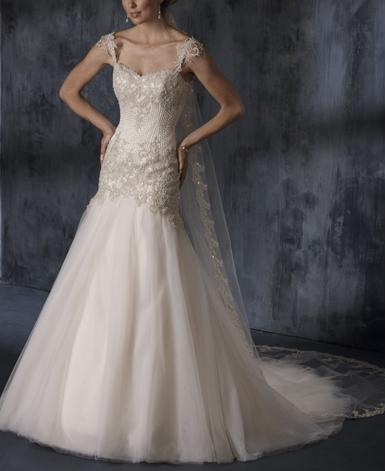
A wedding dress or wedding gown is the clothing worn by a bride during a wedding ceremony. Color, style and ceremonial importance of the gown can depend on the religion and culture of the wedding participants. In Western cultures, brides often choose a white wedding dress, which was made popular by Queen Victoria in the 19th century. In eastern cultures, brides often choose red to symbolize auspiciousness.
Contents  [hide] 
1 Western culture
1.1 Current fashion
2 Eastern culture
3 Native American culture
4 Gallery
5 Notes
6 External links
[edit]Western culture

Weddings performed during and immediately following the Middle Ages were often more than just a union between two people. They could be a union between two families, two businesses or even two countries. Many weddings were more a matter of politics than love, particularly among the nobility and the higher social classes. Brides were therefore expected to dress in a manner that cast their families in the most favorable light, for they were not representing only themselves during the ceremony. Brides from wealthy families often wore rich colors and exclusive fabrics. It was common to see them wearing bold colors and layers of furs, velvet and silk.

The woman to the far right is wearing a typical wedding dress from 1929. Until the late 1960s, wedding dresses reflected the styles of the day. From that time onward, wedding dresses have often been based on Victorian styles.
The first documented instance of a princess who wore a white wedding gown for a royal wedding ceremony is that of Philippa of England, who wore a tunic with a cloak in white silk bordered with grey squirrel and ermine) in 1406.[1]; Mary, Queen of Scots, wore a white wedding gown in 1559 when she married her first husband, Francis Dauphin of France because it was her favorite color, although white was then the color of mourning for French Queens.
This was not a widespread trend, however: prior to the Victorian era, a bride was married in any color, black being especially popular in Scandinavia.[2]
White became a popular option in 1840, after the marriage of Queen Victoria to Albert of Saxe-Coburg, where Victoria wore a white gown to incorporate some lace she prized. The official wedding portrait photograph was widely published, and many brides opted for white in accordance with the Queen's choice.[3]
Even after that, for a period, wedding dresses were adapted to the styles of the day. For example, in the 1920s, they were typically short in the front with a longer train in the back and were worn with cloche-style wedding veils. This tendency to follow current fashions continued until the late 1960s, when it became popular to revert to long, full-skirted designs reminiscent of the Victorian era.
Today, Western wedding dresses are usually white[4] though "wedding white" includes shades such as eggshell, ecru and ivory.
Later, many people assumed that the color white was intended to symbolize virginity, though this was not the original intention: it was the color blue that was connected to purity[citation needed].
[edit]Current fashion
About 75% of wedding dresses on the market are strapless, sleeveless gowns, in part because such dresses require less skill from the designers and are easier to alter to fit correctly.[5]

Vietnamese wedding Ao dai
[edit]Eastern culture

Many wedding dresses in China, India (wedding sari) and Vietnam (in the traditional form of the Ao dai) are colored red, the traditional color of good luck and auspiciousness. Nowadays, many women choose other colors besides red. In modern mainland Chinese weddings, the bride may opt for Western dresses of any color, and later don a traditional costume for the official tea ceremony.

Qing dynasty styled traditional Chinese wedding dress with phoenix crown (鳳冠) headpiece still used in modern Taiwanese weddings.
In modern Taiwanese weddings, the bride generally picks red (following Chinese tradition) or white (more Western) silk for the wedding gown material, but most will wear the red traditional garmet for their formal wedding banquets. Traditionally, the father of the bride is responsible for the wedding banquet hosted on the bride's side and the alcohol (specifically called "xi-jiu," confusingly the same as what the wedding banquet itself is called) consumed during both banquets. While the wedding itself is often based on the couple's choices, the wedding banquets are a symbolic gesture of "thanks" and appreciation, to those that have raised the bride and groom (such as grandparents and uncles) and those who will continue to be there to help the bride and groom in the future. Thus out of respect for the elders, wedding banquets are usually done formally and traditionally.
Red wedding saris are the traditional garment choice for brides in Indian culture. Sari fabric is also traditionally silk. Over time, color options and fabric choices for Indian brides have expanded. Today fabrics like crepe, Georgette, charmeuse, and satin are used, and colors have been expanded to include gold, pink, orange, maroon, brown, and yellow as well.[6] Indian brides in Western countries often wear the sari at the wedding ceremony and change into traditional Indian wear afterwards (lehnga, choli, etc.).

Japanese formal wedding dress still used today.
At Japanese weddings, brides will often wear three or more dresses throughout the ceremony and subsequent celebrations with a traditional kimono, white and colour dress combination being popular. White is used, because in Japan it symbolizes death—in this case, the bride becomes dead to her family. The bride will eventually remove her white kimono to reveal another colored one—usually red—to symbolize her rebirth into her husband's family.
The Javanese people of Indonesia wear a kebaya, a traditional kind of blouse, along with batik.
In the Philippines, variations of the Baro't saya are considered to be wedding attire for women, along with the Barong Tagalog for men.
[edit]Native American culture

Apache bride
The indigenous peoples of the Americas have varying traditions related to weddings and thus wedding dresses. A Hopi bride traditionally would have her garments woven by the groom and any men in the village who wished to participate. The garments consisted of a large belt, two all-white wedding robes, a white wedding robe with red stripes at top and bottom, white buckskin leggings and moccasins, a string for tying the hair, and a reed mat in which to wrap the outfit. This outfit also would serve as a shroud, since these garments would be necessary for the trip through the underworld.
A Pueblo bride wore a cotton garment tied above the right shoulder, secured with a belt around the waist.
In the traditions of the Delaware, a bride would wear a knee-length skirt of deerskin and a band of wampum beads around her forehead. Except for fine beads or shell necklaces, the body would be bare from the waist up. If it were a winter wedding, she would wear deerskin leggings and moccasins and a robe of turkey feathers. Her face would be painted with white, red and yellow clay.
The tribes of Northern California (which include the Klamath, the Modoc and the Yurok) had a traditional bridal dress woven in symbolic colors: white for the east, blue for the south, yellow (orange) for the west; and black for the north. Turquoise and silver jewelry were worn by both the bride and the groom in addition to a silver concho belt. Jewelry was considered a shield against evils including hunger, poverty and bad luck 
Bridal Dress Wedding
Top 10 Wedding Dress Fashion Trends for Brides, Spring 2011 - The Knot
Disney Fairy Tale Alfred Angelo Bridal Dress Wedding Dress.wmv